
Radioactive gases in nuclear power plant exhaust gases are mainly divided into two categories, requiring different activated carbon treatment schemes:
1. Radioactive iodine (131I/129I) and its organic compounds (such as methyl iodine CH₃I)
Hazards: Highly volatile, easily absorbed by the human body, accumulates in the thyroid gland, and poses significant radiation hazards.
Treatment focus: Highly efficient adsorption and removal are essential to prevent release into the environment.
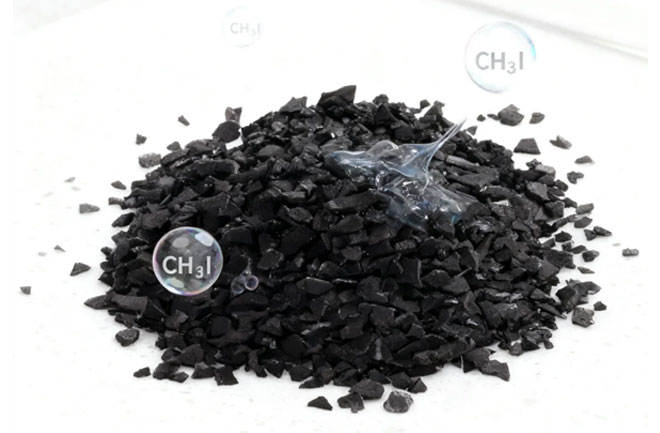
2. Working principle: Utilizing the physical adsorption properties of activated carbon, the residence time of radioactive gases in the carbon bed is extended, allowing them to reduce radioactivity through natural decay. Therefore, activated carbon should possess the following characteristics:
High specific surface area: ≥1200m²/g, enhancing physical adsorption capacity
Appropriate micropores/ Mesopore ratio: Facilitates diffusion and retention of inert gas molecules.
High bulk density: Increases adsorption capacity per unit volume, reducing equipment size.
High strength: Resists airflow impact, ensuring long-term stability.
Recommended type: Coconut shell-based or fruit shell-based activated carbon, such as coconut shell 01 and 02 charcoal, and fruit shell 11 and 12 charcoal, which perform excellently in ambient temperature retention beds.

 Get Free Sample
 WhatsApp