
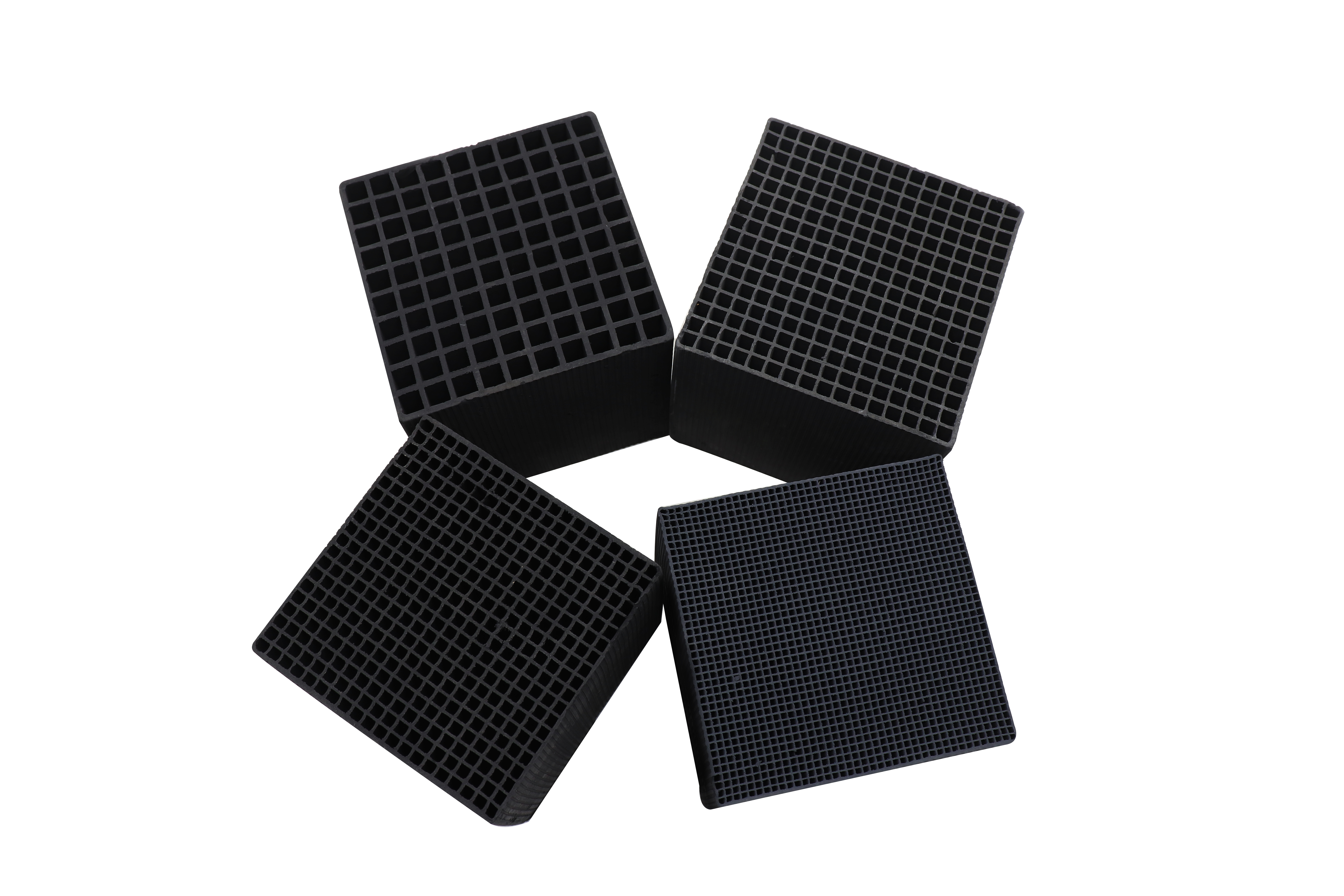
The role of honeycomb activated carbon in gas purification is primarily based on physical adsorption, chemical adsorption, and its unique low-pressure-drop characteristics.
Its highly developed microporous structure and large specific surface area enable effective capture of volatile organic compounds (VOCs) and odorous molecules, while its channel design allows high flow rates with minimal energy loss, making it ideal for large-scale ventilation and exhaust treatment systems.
Adsorption of Volatile Organic Compounds (VOCs): Leveraging its well-developed pore structure and high specific surface area (typically 800–1,200 m²/g), honeycomb activated carbon can efficiently adsorb benzene, toluene, xylene, and other VOCs generated from painting, printing, chemical synthesis, and coating processes, thereby reducing atmospheric photochemical pollution.
Removal of Odorous Gases and Harmful Impurities: Honeycomb activated carbon exhibits excellent adsorption capacity for odorous compounds such as hydrogen sulfide (H₂S), ammonia (NH₃), and organic amines. It is commonly used in sewage treatment plants, waste transfer stations, and livestock farms to control odor nuisance.
Low-Resistance Air Purification: The parallel-channel honeycomb design allows flue gas or air to pass through with a pressure drop as low as 200–300 Pa per 100 mm thickness at a face velocity of 1 m/s, significantly reducing fan energy consumption compared to granular activated carbon beds. This makes honeycomb carbon a cost-effective solution for purifying large volumes of air in industrial exhaust systems and building ventilation.

 Get Free Sample
 WhatsApp