
Main Types:
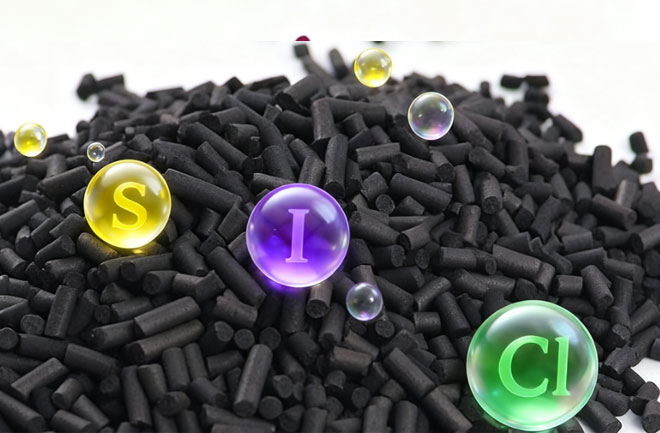
Sulfur-impregnated activated carbon: The most widely used and cost-effective type, it is highly effective against elemental mercury vapor. It is commonly used for flue gas treatment in coal-fired power plants and waste incineration plants.
Iodine-impregnated activated carbon: It may be more effective against certain forms of mercury (such as mercuric oxide), but is generally more expensive than sulfur-impregnated carbon.
Impermeation with other metal sulfides: Materials such as zinc sulfide are also being researched and used.
Main Applications:
Mercury removal activated carbon is a core material for deep mercury removal in the industrial sector.

Industrial Flue Gas Purification:
Coal-fired Power Plants: Coal combustion generates mercury vapor, which is one of the main anthropogenic sources of mercury pollution.
Waste incineration plants: Mercury-containing items in waste (such as batteries, fluorescent light bulbs, and old appliances) release mercury during incineration.
Cement plants: Mercury may be present in raw materials and fuels.
In these applications, activated carbon for mercury removal is typically sprayed into flue gas ducts in powder form or applied as a granular bed to filter flue gas.
Natural gas purification:
Produced natural gas may contain high concentrations of mercury, which can cause severe corrosion (mercury amalgamation) to aluminum pipes and equipment. It must be thoroughly removed before use.
Chemical process gas:
Protecting expensive catalysts from mercury poisoning in processes such as the chlor-alkali industry and ethylene production.
Laboratories and special locations:
Used to protect personnel in mercury-containing laboratory fume hoods, dental clinics (where fillings contain mercury), and mercury mining and thermometer production facilities.
Water treatment:
Treats mercury contamination in industrial wastewater.
Precautions for use: Temperature: Operating temperatures should be kept below 50-60°C, as this will affect the efficiency of chemical reactions and the safety of the activated carbon itself.
Moisture: While somewhat water-resistant, excessive humidity (e.g., saturated water vapor) can compete with sulfur for active sites, reducing mercury removal efficiency.
Other Gases: Acidic gases in flue gas (SO₂, NOx) may affect the performance of certain types of mercury-removal carbon.
Disposal: Saturated mercury-removal activated carbon is inherently hazardous waste due to its high concentration of mercury. It must be safely disposed of or mercury recovered by a qualified, professional organization in accordance with hazardous waste management regulations.
Summary:
Mercury-removal activated carbon is a highly effective and specific mercury pollution control material. It chemically converts toxic mercury vapor into stable compounds, permanently removing it from the environment or process airstreams. It is an indispensable technical tool for combating mercury pollution in the industrial sector and is of great significance for protecting the environment and human health.
 Get Free Sample
 WhatsApp