
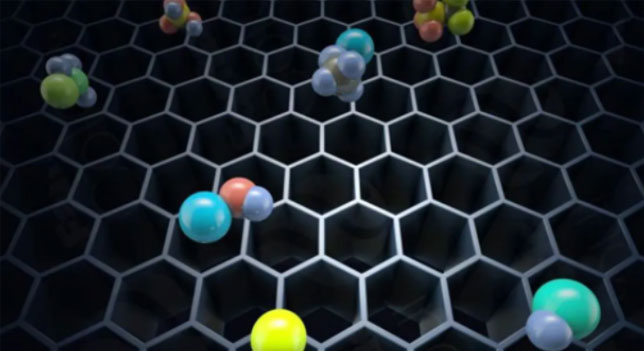
Dioxins are a group of highly toxic organic chemicals classified as persistent organic pollutants (POPs). They are unintentional byproducts of industrial and thermal processes, primarily from the incomplete combustion of chlorine-containing organic matter, such as waste incineration and pulp bleaching. Once introduced into the environment, dioxins are difficult to decompose and accumulate in the food chain, causing various health problems in humans, including reduced immune function, reproductive and genetic alterations. Activated carbon effectively adsorbs dioxins, and its specific surface area is a key factor influencing adsorption.
The following will explain this effect in detail from several aspects:
1. Core Principle: The Dominance of Physical Adsorption
Activated carbon adsorbs dioxins primarily through physical adsorption (also known as van der Waals forces). This is a surface process in which dioxin molecules are trapped on the pore surfaces of the activated carbon through intermolecular forces.
Specific surface area: Defined as the total surface area per gram of activated carbon, typically expressed in square meters per gram (m²/g). It is a fundamental indicator of activated carbon's adsorption capacity.
Direct Relationship: A larger specific surface area means the activated carbon provides more "parking spaces" for dioxin molecules. Therefore, activated carbon with a high specific surface area theoretically has a higher saturated adsorption capacity, meaning that a unit mass of activated carbon can adsorb more dioxin molecules.
2. The "quality" of specific surface area is more important than the "quantity": The key role of pore size distribution
Not all specific surface areas are effective for dioxin adsorption. Specific surface area is composed of micropores, mesopores, and macropores, each of which has different effects.
Dioxin molecular size: Dioxins are large organic molecules with a molecular kinetic diameter of approximately 0.7-1.2 nm.
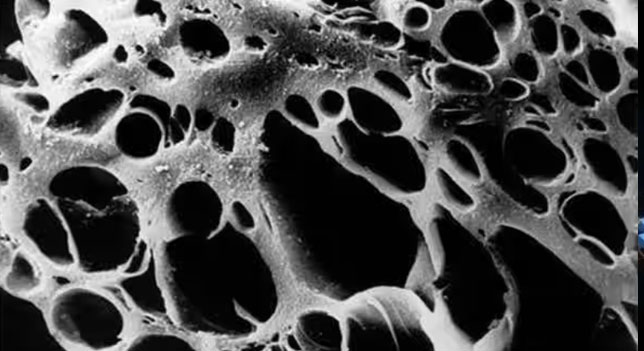
Most effective pore size (matching effect):
Micropores (< 2 nm): They are the primary site for dioxin adsorption. Research generally agrees that micropores with a pore size of 1.5-3 times the dioxin molecule diameter have the highest adsorption capacity. This means that micropores with a pore size of 1.0-3.6 nm are most effective for capturing dioxin molecules. Within this range, the adsorption force field generated by the pore wall on the target molecule is the strongest, resulting in the most robust adsorption.
Mesopores (2-50 nm): They primarily serve as transport channels, transporting dioxin molecules from the exterior to the micropores within, but their own adsorption capacity is limited.
Macropores (>50 nm): They have a smaller role, primarily providing access to the interior of the carbon particles.
Conclusion: An activated carbon with a high surface area but composed primarily of mesopores and macropores may have a much lower dioxin adsorption capacity than an activated carbon with a slightly lower surface area but rich in micropores of appropriate size (1-3.6 nm). Therefore, an appropriate pore size distribution (well-developed and well-matched micropores) is more important than simply pursuing a high surface area.
 Get Free Sample
 WhatsApp